



Vaccination Schedules for Puppies and Kittens: A Veterinary Guide
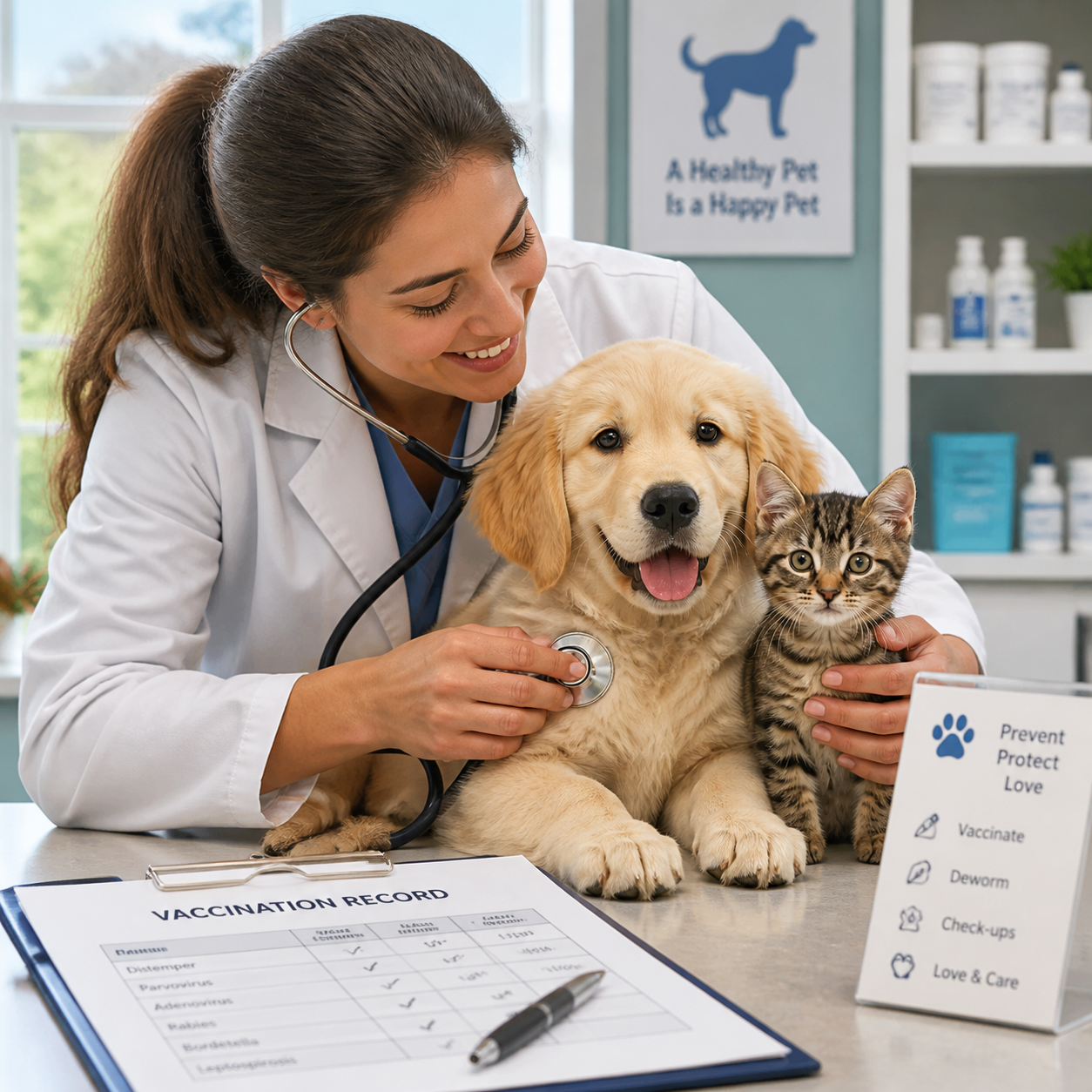
Vaccinations give young pets important protection while their immune systems develop. Because puppies and kittens respond differently to maternal antibodies, and because health history and exposure risks vary, a veterinary team should create an individualized plan rather than apply one fixed schedule to every animal.
Why Vaccinations Matter for Young Pets
Vaccinations help puppies and kittens develop immunity to serious, preventable infectious diseases. They also reduce the chance of transmission between pets and support community health by limiting diseases that can affect animals and, in some cases, people.
Newborn puppies and kittens receive temporary antibodies through their mother’s colostrum, the first milk produced after birth. These maternal antibodies can protect them early in life, but they may also interfere with a vaccine. Their levels decline at different rates, which is why young pets usually need a series of vaccinations rather than one injection.
A veterinary examination before vaccination helps confirm that a pet is well enough to receive the planned vaccine. The veterinarian may consider age, weight, symptoms, parasite exposure, previous records, household pets, local disease patterns, and plans for boarding, travel, training classes, or outdoor access.
Vaccination does not replace good preventive care. Puppies and kittens also need appropriate parasite prevention, nutrition, identification, safe socialization, and regular health checks. Until the initial vaccine series is complete, owners should limit contact with unknown or unvaccinated animals and avoid contaminated environments identified by their veterinarian.
Puppy Vaccination Schedule
A typical puppy vaccination schedule begins at about 6–8 weeks of age and continues every 2–4 weeks until at least 16 weeks. The exact timing depends on maternal antibodies, the puppy’s health, vaccine product, local risks, and veterinary assessment.
| Approximate age | Common vaccination planning |
|---|---|
| 6–8 weeks | First combination vaccine may be given after a health examination. |
| 10–12 weeks | Follow-up combination vaccine; additional non-core protection may be discussed. |
| 14–16 weeks | Final puppy-series combination dose is often scheduled, depending on risk and product guidance. |
| 12–16 weeks or as required by law | Rabies vaccine is administered according to local regulations and veterinary advice. |
| About 12 months later | Booster vaccinations help maintain protection and begin the adult preventive plan. |
The usual puppy combination vaccine protects against several important diseases, often including canine distemper, adenovirus, and parvovirus. Some products also include parainfluenza. The precise formulation varies, so the veterinarian should explain which diseases each dose covers.
The rabies vaccine deserves special attention. Rabies vaccination is legally required in many locations, and the minimum age, product, and booster interval may be controlled by local law. Your veterinary practice can confirm the requirements that apply to your area.
After the puppy series, booster vaccinations are scheduled according to the vaccine label, current guidelines, legal requirements, and the dog’s risk profile. Choosing a shorter interval may be appropriate for a high-exposure dog, while some vaccines have longer recommended intervals. A record showing the product, date, lot information, and next due date helps prevent gaps.
Kitten Vaccination Schedule
A typical kitten vaccination schedule starts at about 6–8 weeks of age, with repeat doses every 3–4 weeks until approximately 16–20 weeks. Kittens must complete the recommended series because an early dose may be affected by remaining maternal antibodies.
| Approximate age | Common vaccination planning |
|---|---|
| 6–8 weeks | First feline combination vaccine may be given after examination. |
| 10–12 weeks | Second combination vaccine is commonly scheduled. |
| 14–16 weeks | Further dose may be needed to complete the primary series. |
| 12–16 weeks or as required by law | Rabies vaccination is planned according to local regulations and risk. |
| About 12 months later | Booster vaccination and an updated lifestyle assessment are typically discussed. |
The standard kitten combination vaccine commonly covers feline panleukopenia, feline herpesvirus, and feline calicivirus. A veterinarian may also recommend feline leukemia virus vaccination, especially for kittens with outdoor access or contact with cats of unknown status. Indoor living lowers some risks, but it does not eliminate all exposure possibilities.
Keep every appointment in the kitten series. Delaying a dose can leave a protection gap and may require the veterinarian to adjust the schedule. The clinic can advise whether the next injection should be given promptly, whether a series needs restarting, or whether testing and additional history are needed.
Core vs. Non-Core Vaccines
Core vaccines are recommended for most pets because they protect against widespread or especially serious diseases; non-core vaccines are selected according to lifestyle, location, travel, and exposure risk. A vaccine may be essential for one animal and unnecessary for another.
Core vaccines
Core protection commonly includes combination vaccines for puppies and kittens, along with rabies vaccination where recommended or required. For puppies, core disease coverage often includes canine distemper, adenovirus, and parvovirus. For kittens, it commonly includes feline panleukopenia, herpesvirus, and calicivirus.
Rabies is treated as a core or legally required vaccine in many regions because infection is fatal once clinical signs develop and because it can affect people. Local public-health rules should guide timing and documentation.
Non-core vaccines
Non-core options depend on a pet’s circumstances. Examples may include:
- Canine leptospirosis vaccination for dogs exposed to wildlife, standing water, rural environments, or regional disease risk.
- Canine Bordetella and other respiratory protection for dogs attending boarding facilities, daycare, shows, or group training.
- Feline leukemia virus vaccination for kittens and cats with outdoor access or contact with unfamiliar cats.
- Additional vaccines recommended for specific travel destinations or local outbreaks.
The trade-off is straightforward: broader vaccination can reduce risk in high-exposure settings, but every injection should have a reason. Your veterinarian weighs likely benefit, possible adverse effects, vaccine availability, and the pet’s medical history before recommending a non-core product.
What Happens at a Vaccination Appointment
A vaccination appointment includes a health assessment, review of records and risks, vaccine administration, documentation, and aftercare guidance. The injection is only one part of responsible preventive medicine.
Before the appointment, bring previous vaccination records and mention coughing, vomiting, diarrhea, appetite changes, medication, recent illness, pregnancy, allergies, or past vaccine reactions. The veterinarian examines the pet and may postpone vaccination if the animal is significantly unwell.
The veterinary team then discusses which vaccines are due, whether they are core or non-core, and how the schedule fits the pet’s lifestyle. For example, a puppy starting daycare may need different respiratory protection from a dog living in a low-contact household. A kitten described as indoor-only may still be assessed for household changes, escapes, or contact with other cats.
After administration, staff record the vaccine name, date, and next recommended appointment. Keep this documentation accessible for boarding, travel, licensing, and future veterinary visits. Some clinics suggest waiting briefly before leaving so the team can observe an immediate reaction, particularly when there is a relevant history.
Missed Vaccinations, Boosters, and Special Circumstances
If a puppy or kitten misses a vaccine, contact a veterinarian promptly rather than guessing whether to restart the series. The clinic will review age, interval since the last dose, vaccine product, health status, and available records before adjusting the plan.
Adopted pets and unknown histories
For an adopted puppy or kitten with incomplete records, the veterinarian may recommend treating the history as unknown. A careful examination, parasite assessment, and catch-up vaccination plan can provide a safer starting point. Do not rely on verbal assurances when written documentation is unavailable.
Unwell, pregnant, or medically complicated pets
Vaccination decisions may change if a pet has fever, active infection, immune-mediated disease, is receiving immunosuppressive medication, or is pregnant. The right choice depends on the individual risk of disease and the potential benefit of vaccination. Never delay essential care without discussing it with the veterinary team.
Booster vaccinations are reminders that immunity is maintained over time, not a sign that the initial series failed. The timing may differ by vaccine, age, regional law, and risk. Accurate records make these decisions much easier.
Vaccine Reactions and When to Seek Veterinary Care
Mild vaccine reactions can include sleepiness, reduced appetite, tenderness, or a small swelling for a short period; breathing difficulty, collapse, facial swelling, or repeated vomiting requires urgent veterinary attention. When in doubt, call the clinic that administered the vaccine.
For mild effects, provide a quiet space and monitor the pet. A small injection-site lump may take time to resolve, but ask your veterinarian what duration and size they consider acceptable. Do not give human pain medication unless a veterinarian specifically instructs you, because many common products are toxic to dogs and cats.
Seek immediate care for:
- Difficulty breathing, widespread hives, or sudden facial swelling.
- Collapse, extreme weakness, pale gums, or unresponsiveness.
- Repeated vomiting or severe diarrhea.
- A rapidly enlarging, very painful, or persistent injection-site swelling.
Serious reactions are uncommon, but prompt treatment matters. Tell the veterinarian about any previous reaction before future booster vaccinations; the team may change the product, observation period, or appointment plan.
Frequently Asked Questions
When should puppies receive their first vaccinations?
Puppies commonly receive their first core vaccination at 6–8 weeks, followed by doses every 2–4 weeks until at least 16 weeks. A veterinarian may adjust this plan based on health, maternal antibodies, local risk, and vaccine guidance.
When should kittens receive their first vaccinations?
Kittens commonly begin core vaccinations at 6–8 weeks, with repeat doses every 3–4 weeks until roughly 16–20 weeks. Completing the full kitten vaccination schedule is essential.
Do indoor cats need vaccinations?
Yes, indoor cats may still need core vaccines and rabies protection where required. Escapes, visitors, other pets, veterinary visits, and future lifestyle changes can create exposure risks.
What should I do if my puppy or kitten misses a vaccine?
Call your veterinarian and provide the vaccination record. The team will create a catch-up plan; do not assume that every missed series must automatically restart.
Can puppies or kittens go outside before completing their vaccination series?
They should avoid high-risk environments and unknown animals until their veterinarian confirms a safer plan. Controlled socialization with healthy, vaccinated animals and clean settings may be possible, but the acceptable level of exposure depends on local disease risk.
A veterinary team can turn a general timeline into a practical plan for your pet. Schedule the initial veterinary examination, keep vaccination records current, continue parasite prevention, and attend booster appointments as advised.